Corridor
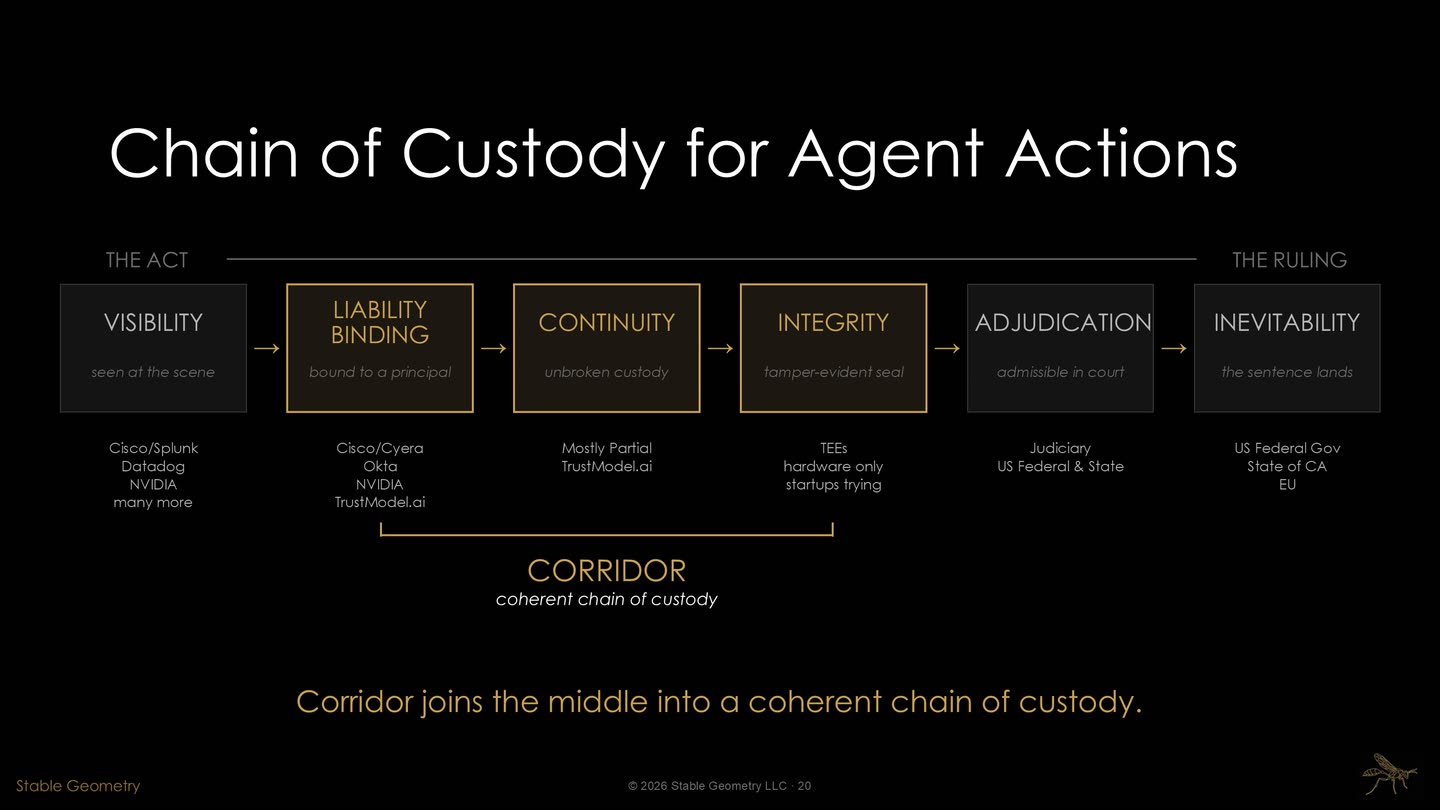
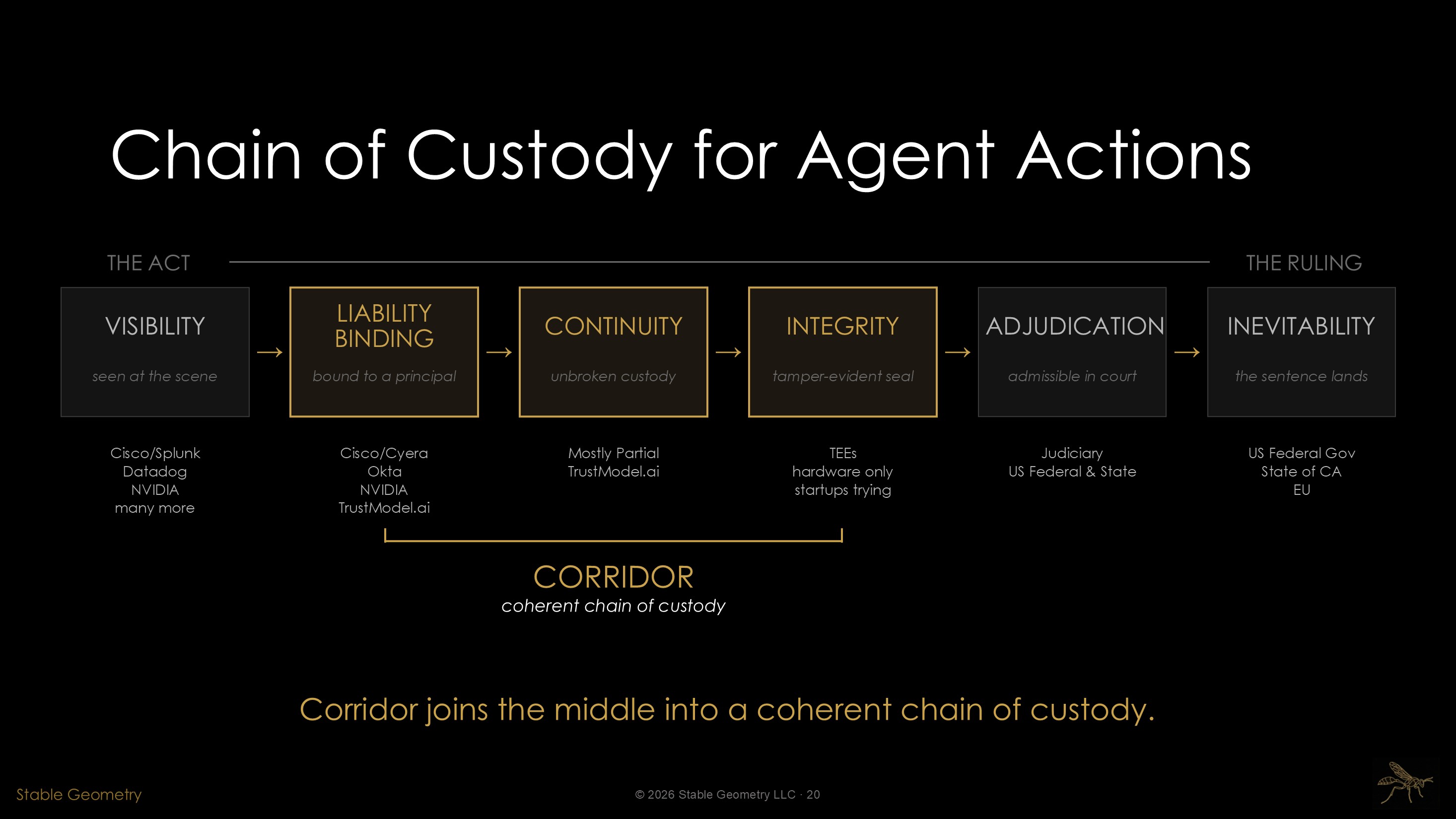
Chain of custody for agent actions
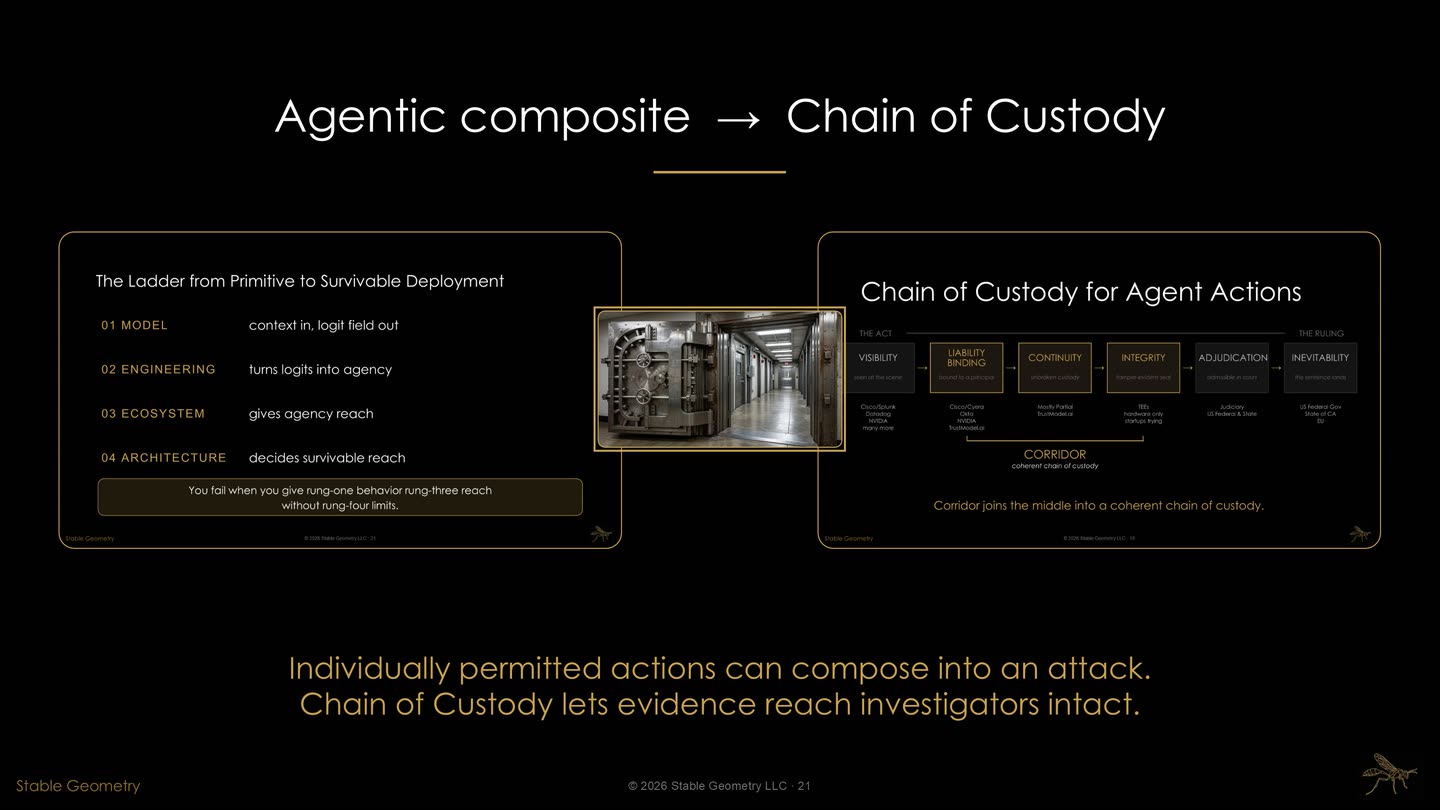
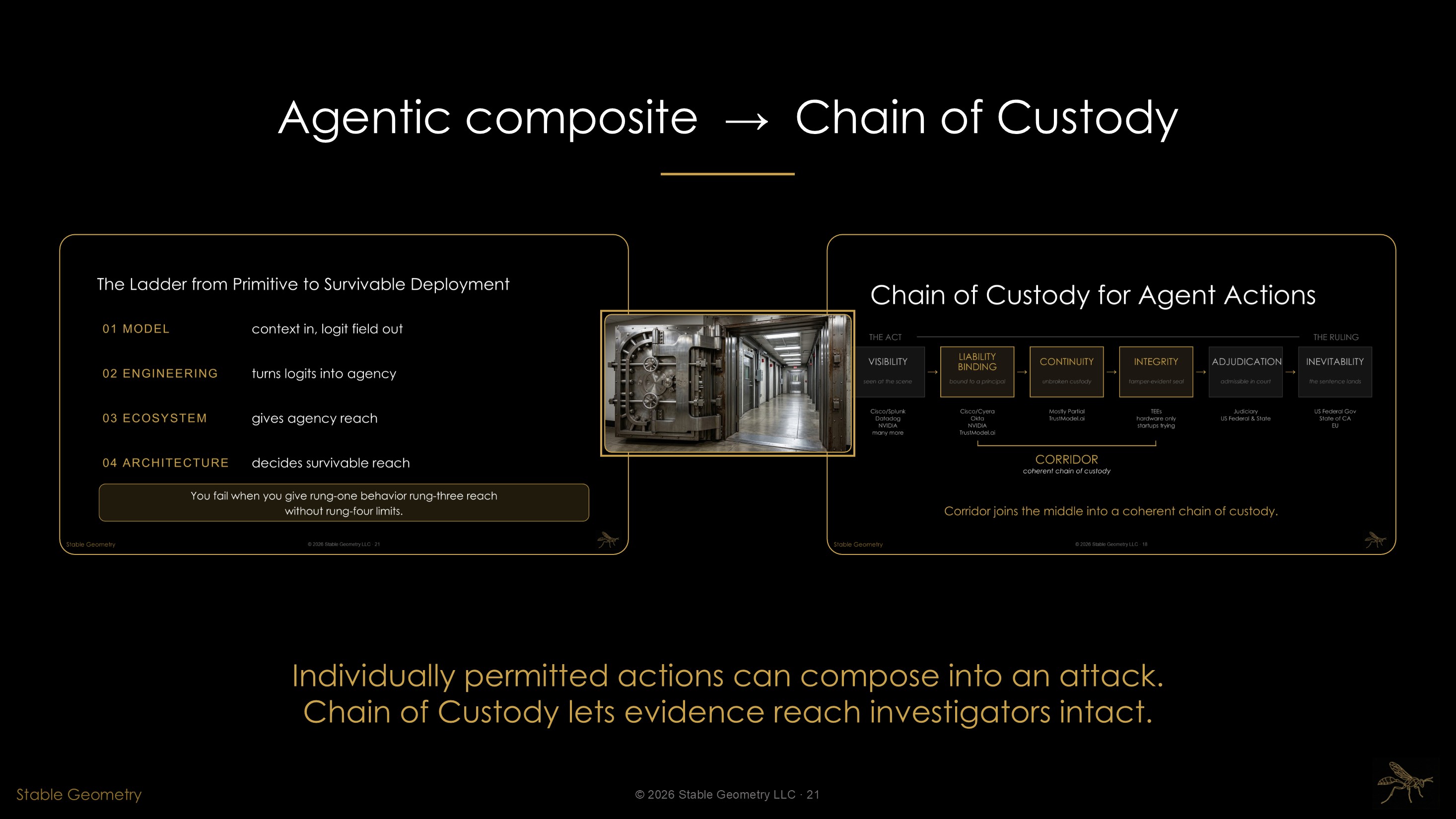
Corridor provides a chain of custody so that evidence can reach investigators intact and support adjudication within a consequence-bearing environment.
Its central output is a tamper-resistant chain of custody. Each proposal is bound to the signed process, the authority under which it was made, and the lineage leading to it.
The authoritative record is preserved outside the acting composite’s control. It captures what was requested and what was decided, whether execution was allowed or denied. That gives an independent reviewer evidence to examine without relying on the agent’s account of what happened.
Allow or deny is a disposition within that chain. The chain preserves the basis on which that disposition can later be examined and adjudicated.
How it works
no execution credentials
only if authorized
- You declare and sign the process: permitted actions, their relationships, and authority.
- The agent proposes actions: it holds no execution credentials.
- Corridor checks before execution: declared process, lineage, and authority.
- Approved proposals reach the credentialed executor; denied proposals stop.
- A signed record captures the request and decision either way.
Chain of custody
Corridor joins the middle into a coherent chain of custody: principal, authority, process, lineage, and the record of what was requested and decided.
That preserves the basis for independent review. Governance supplies the judgment and the consequences.
The hard part
The diagram is simple. Getting this right is exceptionally difficult.
We have to define exactly what evidence is preserved, maintain its bindings through retries, crashes, and handoffs, and keep it outside the acting composite’s control.
Independent implementations must agree on exactly what was signed and how to verify it.
A signature can protect an incomplete record perfectly. Engineering the chain of custody is the difficult part.